
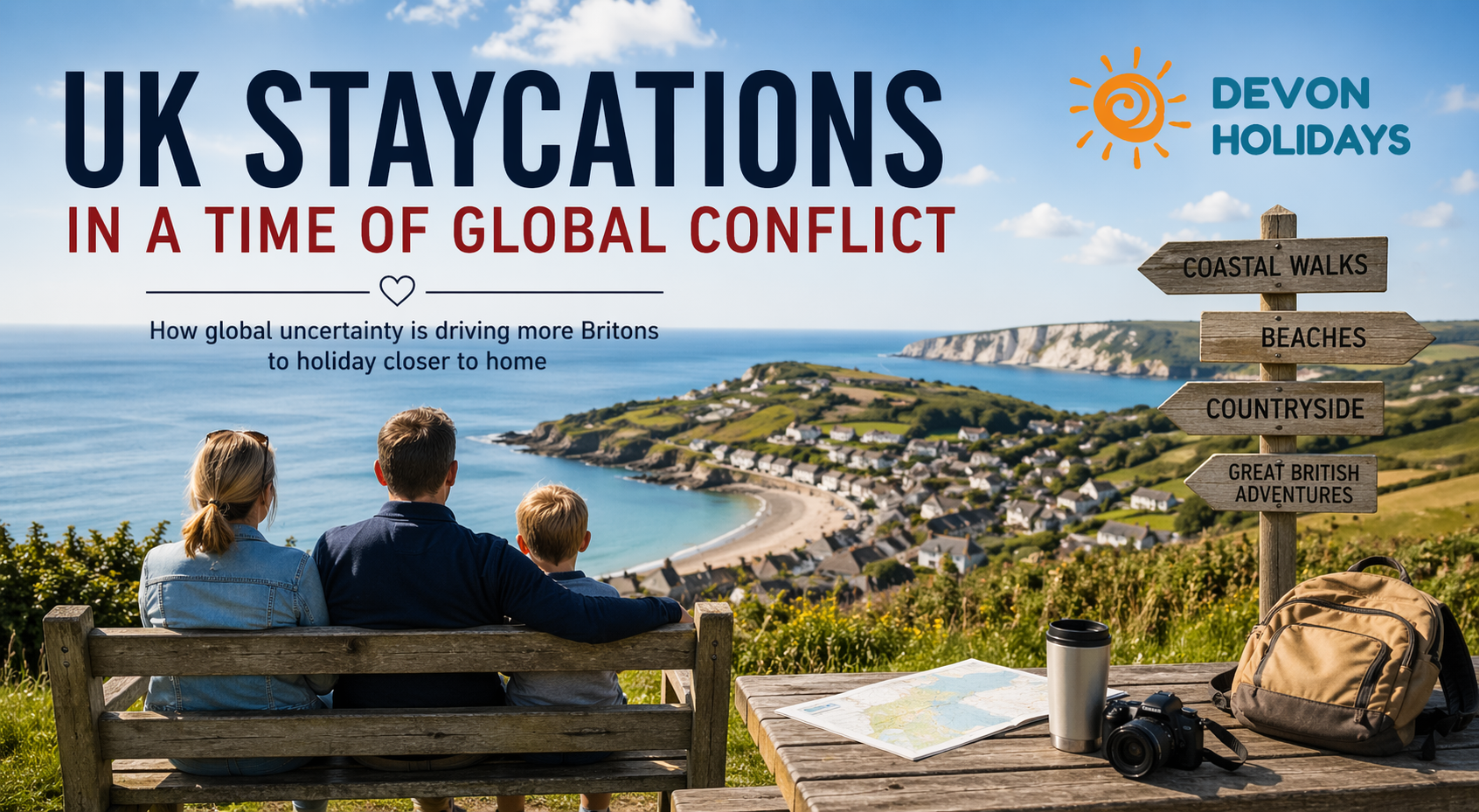
How Global Conflict Is Reshaping UK Staycations: The Surprising Winners, Hidden Costs, and What It Means for British Holidaymakers
A World Event with Local Consequences
Global conflicts often feel distant—geographically removed and politically complex—but their ripple effects can reach deep into everyday life. One of the more unexpected areas being reshaped by recent geopolitical tensions (including US-led conflicts often loosely referred to as the “Trump war”) is the way Britons choose to holiday.
In 2026, UK staycations are experiencing a remarkable surge. What began as a pandemic-era trend has evolved into something more structural: a shift in how people perceive travel risk, value, and convenience. But while the headlines suggest a booming domestic tourism sector, the reality is more nuanced.
This blog explores the positive and negative impacts of global conflict on UK staycations, unpacking what’s driving the trend, who benefits, who loses, and whether this shift is here to stay.
The Big Picture: Why War Affects Holidays
At first glance, it might seem odd that tensions in the Middle East or US foreign policy decisions could influence whether a family from Kent books a week in Cornwall instead of Spain. But the connection becomes clear when you consider the following:
- Air travel disruption risks (flight cancellations, rerouting)
- Rising oil prices affecting ticket costs
- General uncertainty and perceived danger
- Media coverage amplifying travel anxiety
For many UK travellers, the result is simple: stay closer to home.
The Staycation Boom: A Clear Upside
1. A Surge in Domestic Travel Demand
One of the most striking outcomes of global instability is the sharp rise in UK holiday bookings.
Reports indicate:
- Staycation bookings have surged dramatically, in some cases by over 200%
- Around 40% of travellers reconsidering international trips are switching to UK holidays
- More than half of Britons are planning a domestic holiday in 2026
This isn’t just a marginal uptick—it’s a behavioural shift. The UK is no longer just a backup option; for many, it’s now the first choice.
2. Safety and Peace of Mind
In uncertain times, safety becomes a primary driver of decision-making.
UK staycations offer:
- No reliance on international flights
- No exposure to geopolitical hotspots
- Familiar healthcare systems and infrastructure
- Easier contingency planning
Even if the actual risk abroad is relatively low, perceived risk matters more than reality. And right now, the perception is clear: staying in the UK feels safer.
3. A Major Boost to the UK Economy
The domestic tourism sector is one of the biggest winners.
Increased staycation demand means:
- More revenue for local hotels, B&Bs, and holiday parks
- Increased spending in restaurants, pubs, and attractions
- Revitalisation of coastal towns and rural economies
Billions of pounds are being redirected from overseas travel into the UK economy. Areas that rely heavily on seasonal tourism—like Cornwall, Devon, the Lake District, and parts of Scotland—are seeing particularly strong benefits.
4. A Shift in Travel Culture
The rise in staycations isn’t just about fear—it’s also about changing preferences.
Modern UK travellers are increasingly drawn to:
- Shorter, more frequent breaks
- Nature and outdoor experiences
- Cultural and heritage exploration
- Flexible, last-minute travel plans
This aligns perfectly with what the UK offers. From national parks to historic cities, the country is well-positioned to meet these evolving demands.
The Downsides: When Demand Creates Problems
While the staycation boom has clear advantages, it also brings significant challenges—especially for travellers themselves.
1. Rising Prices Across the Board
Perhaps the most noticeable downside is cost.
As demand increases:
- Accommodation prices rise
- Transport costs go up
- Popular destinations become more expensive
In some cases, UK holidays now cost as much as—or even more than—going abroad due to the added costs put upon by suppliers..
This creates a paradox: people stay in the UK to avoid uncertainty, but due to rise in fuel, and lack of pay raises, there is less available cash to even travel in the UK.
2. The Cost-of-Living Squeeze
The broader economic impact of global conflict is also playing a role.
War-driven factors like:
- Higher energy prices
- Increased inflation (around 3%+)
- Rising food and fuel costs
- Lack of company pay reviews
- Jobs being put at risk due to companies rising costs
…are putting pressure on household budgets.
Even though people want to travel, many are:
- Shortening their trips
- Opting for cheaper accommodation
- Delaying bookings
- Or skipping holidays altogether
So while demand is up, affordability is becoming a serious constraint.
3. Availability Issues and Overcrowding
With more people choosing to holiday at home, popular destinations are feeling the strain.
Common issues include:
- Fully booked accommodation during peak seasons
- Limited last-minute options
- Overcrowded beaches and attractions
This reduces spontaneity and can detract from the overall holiday experience.
4. Structural Weaknesses in UK Tourism
The staycation boom is exposing long-standing issues within the UK tourism sector.
These include:
- High VAT rates on accommodation
- Potential introduction of tourist taxes
- Uneven regional investment
- Infrastructure limitations in rural areas
These factors make UK holidays less competitive compared to international destinations—especially once global stability returns.
Who Benefits the Most?
Winners:
- Local businesses (hotels, restaurants, attractions)
- Rural and coastal economies
- UK tourism operators
- Short-break travel providers
Mixed outcomes:
- Middle-income families (benefit from convenience but feel cost pressure)
Losers:
- Budget travellers priced out of popular areas
- International travel industry (airlines, package holidays)
- Consumers seeking value for money
The Psychology Behind the Shift
Understanding this trend requires looking beyond economics.
Three key psychological factors are at play:
1. Risk Aversion
People naturally avoid uncertainty—even if the actual risk is low.
2. Control
Staycations offer more control:
- Easier cancellations
- No passport or border concerns
- Familiar environment
3. Simplicity
Planning a UK trip is simply easier:
- No currency exchange
- No language barriers
- No long-haul logistics
These factors combine to make staycations deeply appealing in uncertain times.
Is This Trend Here to Stay?
This is the critical question.
Short-term outlook (2026–2027): Strong growth
- Continued geopolitical tension will sustain demand
- Staycations remain a “safe default”
Medium-term outlook: Uncertain
If global conditions stabilise:
- International travel may rebound quickly
- Price-sensitive travellers may return to cheaper overseas options
Long-term outlook: Lasting impact
Even if demand dips, some changes are likely permanent:
- Greater appreciation for UK destinations
- Increased popularity of short domestic breaks
- More diversified travel habits
The Key Tension: Safety vs Value
At the heart of this trend is a trade-off:
|
Factor |
Staycation Advantage |
Staycation Disadvantage |
|---|---|---|
|
Safety |
High |
— |
|
Convenience |
High |
— |
|
Cost |
— |
Often higher |
|
Availability |
— |
Limited in peak times |
|
Experience |
Familiar |
Less “escape” factor |
For many travellers, the decision comes down to a simple question:
Is the extra cost worth the peace of mind?
Right now, for millions of Britons, the answer is yes.
Practical Tips for UK Holidaymakers
If you’re planning a staycation in this environment, a few strategies can help:
1. Book early
Demand is high—secure accommodation well in advance.
2. Consider off-peak travel
Avoid school holidays and weekends where possible.
3. Explore lesser-known destinations
Hidden gems can offer better value and fewer crowds.
4. Be flexible
Prices and availability change quickly—adaptability pays off.
5. Compare costs with abroad
Sometimes, a European trip may still be cheaper—even now.
Final Verdict: A Boom with Caveats
So, how is the “Trump war” impacting UK staycations?
The honest answer:
It’s a net positive—but not without significant downsides.
Why it’s positive:
- Strong demand for UK tourism
- Economic boost for local communities
- Increased travel confidence among consumers
Why it’s problematic:
- Rising prices
- Reduced affordability
- Capacity pressures
- Long-term competitiveness concerns
Conclusion: A Moment of Opportunity—and Risk
The current staycation boom represents a unique moment for the UK tourism industry. Global conflict has effectively redirected millions of travellers inward, creating a surge in domestic demand that might otherwise have taken years to develop.
But this opportunity comes with a warning.
If prices continue to rise and structural issues remain unaddressed, the UK risks losing these travellers just as quickly as it gained them.
For now, though, one thing is clear:
In a world that feels increasingly uncertain, the familiarity of home has never been more appealing—and more valuable.